
Finding Northampton County Resident Records
Begin with the fact that is already solid. An address is best for the county property and map tools. A full name, court number, or filing date is better for court records. A historic surname and place can lead to a directory, newspaper, church record, or estate file. Northampton County records work because the same fact can be checked in more than one place, not because any one result is a complete list of residents.
For a current property question, compare the parcel's situs address, owner name, mailing address, and legal description. For a historical family question, keep the printed street name and date from each source. A mailing address is where notices go. It is not proof that a person lives at the property. That distinction prevents a property record from being overread as a household record.
- Use an address, owner name, or parcel identifier in county Assessment Data to establish the property record.
- Check the parcel and municipality in county GIS before carrying a name into a deed or local-office search.
- Use the Recorder's grantor and grantee trail to test a recorded transfer, not to assume who occupied a home.
- For a named person, compare an independent court, vital, voter-status, license, or historical source that fits the question.
- When the web record stops, ask the custodian, library, courthouse counter, or Archives for the specific existing record.
Northampton County Records Offices
The county's records offices have different roles. The Recorder holds recorded property filings. Assessment maintains the tax-property record. The Register of Wills and Orphans' Court handles marriage licenses, estates, and protected court matters. The Prothonotary holds county civil and divorce files, while the Clerk of Courts is the criminal-record custodian. Northampton County Elections administers local election records, but the state status tool is for confirming an individual registration, not browsing nearby people.
Assessment Office
669 Washington Street
Easton, PA 18042
610-829-6500
Elections and Voter Registration
669 Washington Street, Lower Level
Easton, PA 18042-7408
610-829-6260
County normal public hours are Monday through Friday, 8:30 a.m. to 4:30 p.m. The location of the record matters. Microfilmed records are available in the courthouse office of origin, while the County Archives keeps original books, papers, and some computer indexes. A search that ends online may simply need a more precise counter or archive request.
Northampton County Parcel Clues
Northampton County Assessment Data is the practical first stop for an address, owner, or parcel question. Its public application supports owner-name research and address or parcel workflows. The result should be treated as a tax-record lead. Note the parcel number, municipality, situs address, mailing address, assessed values, and legal-description cue before searching another system. The county's GIS and Recorder routes use those details to test a result rather than extend it by guesswork.
| Assessment field | How it works | Use with care |
|---|---|---|
| Owner name | Finds a tax-record owner | Does not identify every household member. |
| Address | Connects a situs to a parcel | Keep the municipality where streets repeat. |
| Parcel or CAMA identifier | Bridges to GIS and deed research | Record it exactly before comparing maps. |
| Mailing address | Shows where tax notices are sent | Do not merge it with the situs address. |
For an address search, NCPUB uses Number, Street, and Direction fields. It does not expose a ZIP, unit, or street-suffix field. The Tax Parcel Viewer supplies a second county route through Property Location, using House Number and Full Road Name. Both tools require the researcher to distinguish a parcel from the people who may be connected with it.
Northampton County Court Name Checks
A name-based Northampton County record check should use a court source only for what that source can confirm. The statewide UJS portal provides a public docket path. The county's Civil Public Search offers name, case, address, and reference routes for local civil material. A docket match needs a second identifier such as county, date, case number, party role, middle initial, or related property record. A no-result can reflect a spelling difference, a protected case, a limited-access record, or a search limitation.
The Pennsylvania UJS portal is the statewide public-docket entry point. A local Common Pleas criminal-record search has a different access channel: the Criminal Division accepts a $10 request in person or by mail. A mailed request requires a business check, certified check, or money order payable to Criminal Division. The office does not provide disposition or sentencing details by phone.
Use the UJS public docket search to check court and case context before asking a clerk for a specific record.
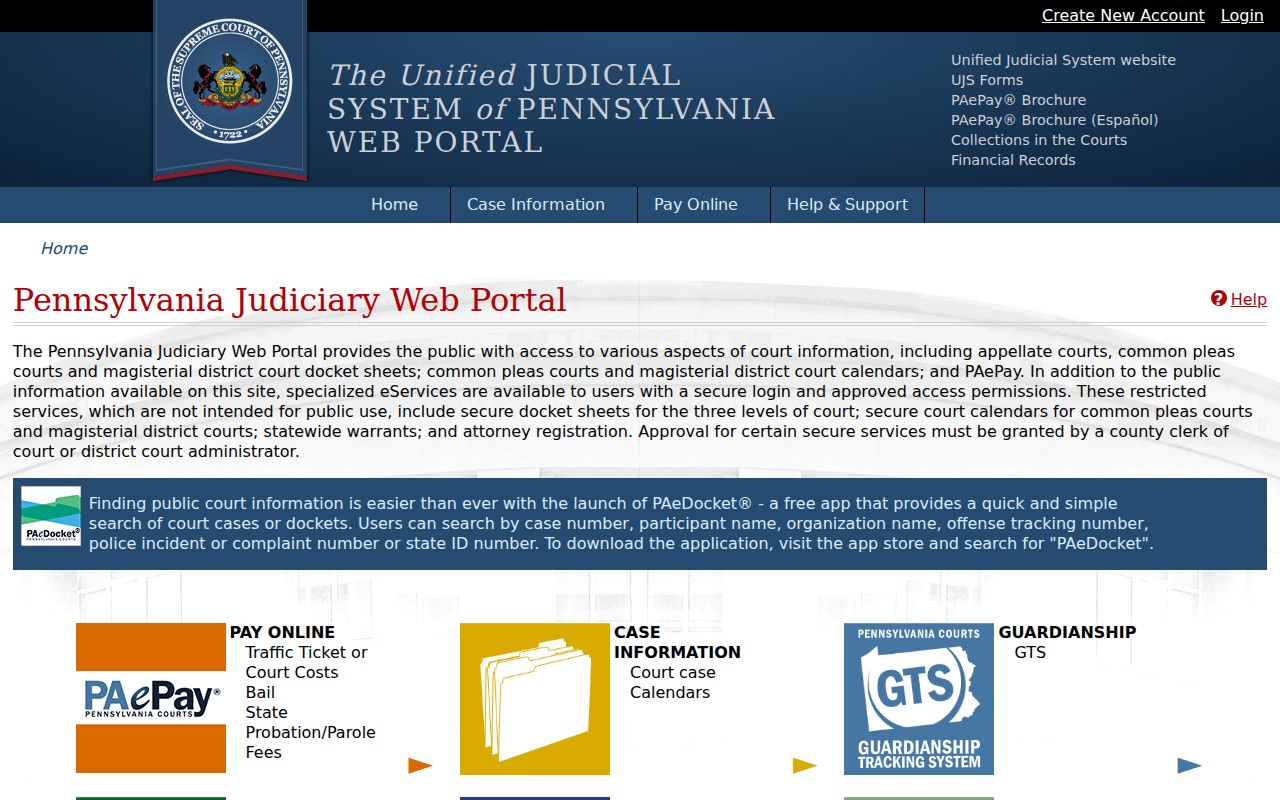
The UJS interface is a starting point for a dated court trail. It does not replace the county clerk's procedure for copies, restricted material, or a local criminal-record request.
Northampton County Resident Sources
Current Northampton County resident sources are scattered by purpose. Property assessment identifies a tax-record owner. Recorded documents identify parties to a transfer. Voter status confirms a particular registration when the official tool and law permit it. A court docket describes a public case trail. A professional license or entity filing may confirm a credential or organization connection. None should be presented as a universal current-resident list.
| Source | What it can establish | Custodian | Access limit |
|---|---|---|---|
| Assessment Data | Tax-record owner, parcel, mailing and situs distinction | County Assessment | Owner evidence is not household proof. |
| Recorder index | Grantor, grantee, recorded transfer | Recorder of Deeds | Older research may need counter or microfilm. |
| UJS docket | Party, case, court, and dated docket context | Pennsylvania courts | Sealed or limited material is excluded. |
| Voter-status tool | Individual registration confirmation | State and county election offices | Not a street or household browser. |
| Directories and newspapers | Historical address or notice lead | Marx Room and repositories | Coverage varies by year and locality. |
A commercial compiled-data category may be stale, paid, or confused by common names. Official custodians and primary local records allow the source, date, and search method to be checked. That is especially important in a county with historical German, Irish, Moravian, and later industrial communities where spelling variants deserve to be retained.
Northampton County Voter Boundaries
The Pennsylvania voter-status lookup is an individual confirmation tool, not a street roster. It should be used only after the name and identity details are already in hand. A nonmatch does not prove that someone never lived in the county. A move, cancellation, protected address, name variation, or entry error can all change what a status check returns.
Public voter-list access has separate rules under 25 P.S. § 1207 and Department of State procedures. The state request form distinguishes Public Information, Street, Walking, and Full Voter Export products, and it requires a use affirmation. Protected addresses, identifiers, signatures, and other confidential fields are not to be reconstructed. Treat voter information as one controlled confirmation point beside an independent property, court, or historical record.
Northampton County Historical Directories
The strongest historical Northampton County resident trail often begins at Easton Area Public Library's Henry F. Marx Local History Room. Easton city directories begin in 1855, and the room also holds Easton-area telephone and cross-reference directories, microfilmed newspapers from 1799, yearbooks, maps, census material, and more than 200 church and cemetery volumes. Those sources can place a name and address in a period without claiming a present connection.
The room is at 515 Church Street in Easton. Its published research hours are Monday through Friday, 10 a.m. to noon and 1 to 4 p.m., plus Saturday hours. Its local newspaper article index covers named date blocks, and the library offers a documented mail-copy route for an article. The full historical shelf and how to read its entries belong on the Northampton County city directory page.
Northampton County Vital Paths
Birth, death, marriage, divorce, and estate questions use different Northampton County doors. Pennsylvania's Division of Vital Records maintains statewide births and deaths from 1906 forward. Historical birth certificates become public 105 years after the birth year, and death certificates become public 50 years after the death year. The State Archives provides non-certified archival copies in its public era, while certified copies come from the Division of Vital Records.
County marriage licenses belong with the Register of Wills and Orphans' Court. County divorce files belong with the Prothonotary where granted. The Register also holds estate records extending from 1752 to the present, subject to court limits. For older events, use county registers, church records, newspapers, cemetery material, and the Archives rather than assuming a modern certificate route applies.
Use Pennsylvania Vital Records for the state's official birth and death access routes.
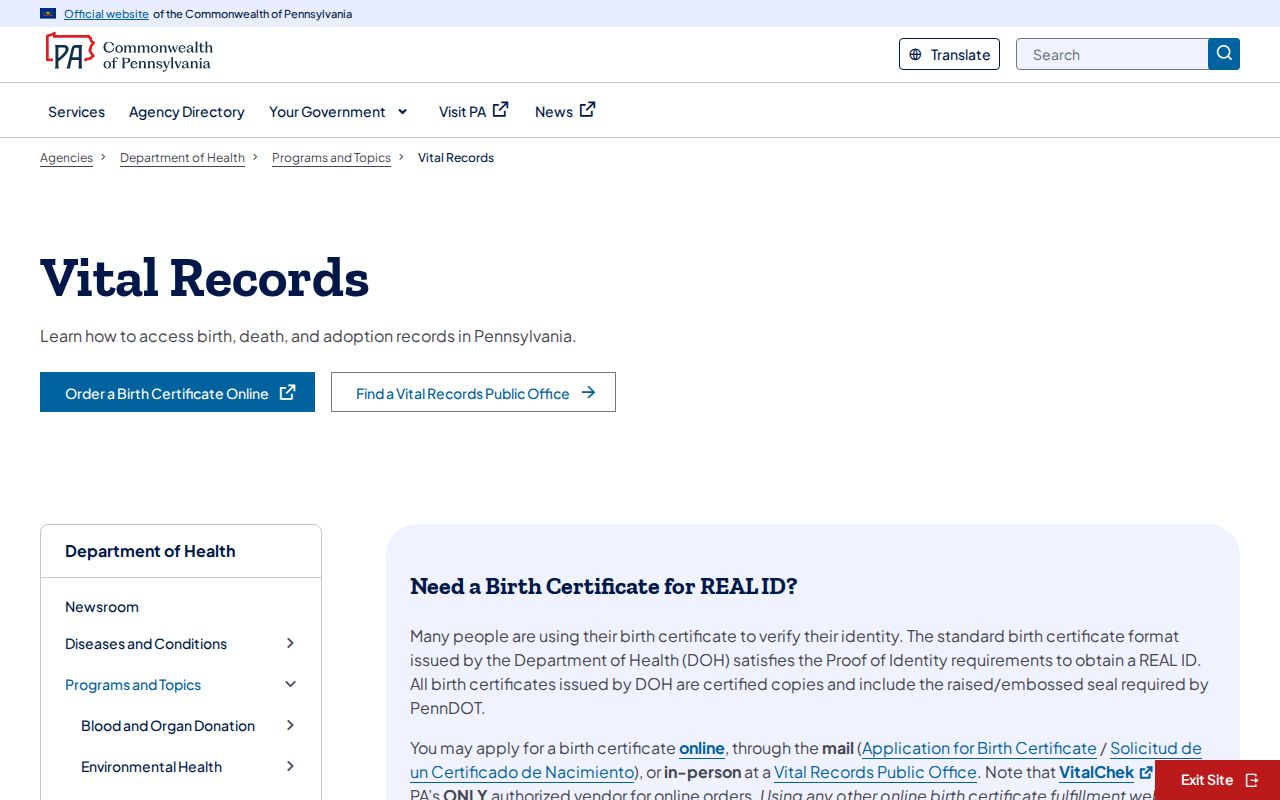
The state service separates formal certificates from historical archive research, so the event year and requested record type should be settled before an application is made.
Northampton County Archive Routes
Northampton County Archives is a practical fallback for historical deeds, tax, court, estate, probate, naturalization, and older vital material. It holds records from more than 30 county offices across 48 filing systems. On-site research is free. The documented mail or email historical search costs $5 per name plus $0.50 per copy page, and the Archives cannot certify copies.
The difference between Archives originals and courthouse microfilm matters. The county says all microfilmed records stay at the courthouse office of origin. Landex terminals are available at the Recorder and Archives locations, but an old record may still require a volume, index book, or microfilm review. A request is most useful when it names the person, variant spelling, record type, municipality, and a narrow time period.
- Roll
- A record series that groups people or property for one administrative purpose.
- Index
- A finding aid that points to a record, not always the underlying image.
- Parcel
- A mapped property unit tied to assessment and legal-description information.
- Criss-cross directory
- An address-to-name directory used to trace a historical occupant at a listed address.
Northampton County Access Requests
The Pennsylvania Right-to-Know Law, Act 3 of 2008, presumes local-agency records are public unless an exception, another law, privilege, or court order applies. A request is for an existing record, not a demand that an office research an answer. Name the record type, address or person if relevant, date range, and preferred format. The county identifies Tyree Blair as its Right-to-Know Officer and provides online, email, and standard-form routes.
The Office of Open Records Citizens' Guide explains the request and appeal process. Court files, vital records, police material, motor-vehicle information, and protected voter information follow their own rules, so an RTKL request is not a substitute for the correct custodian. Keep the request, proof of submission, response, and any extension notice with the research log.
Note: A precise request can identify an available record, but it cannot compel disclosure of a protected address, restricted court material, or information another law makes confidential.
Northampton County Public Safety Records
Public-safety sources have narrow roles. The county Corrections page is a contact resource, not a confirmed public inmate-name roster. For state custody, the Pennsylvania DOC locator covers people under DOC jurisdiction and excludes county facilities. The public Megan's Law resource is a safety disclosure governed by statute, not a general residents directory. Its own warning says information can be outdated and that misuse or harassment can lead to liability.
Use the Pennsylvania Megan's Law public information service only within its public-safety purpose and with its identity limits in mind.
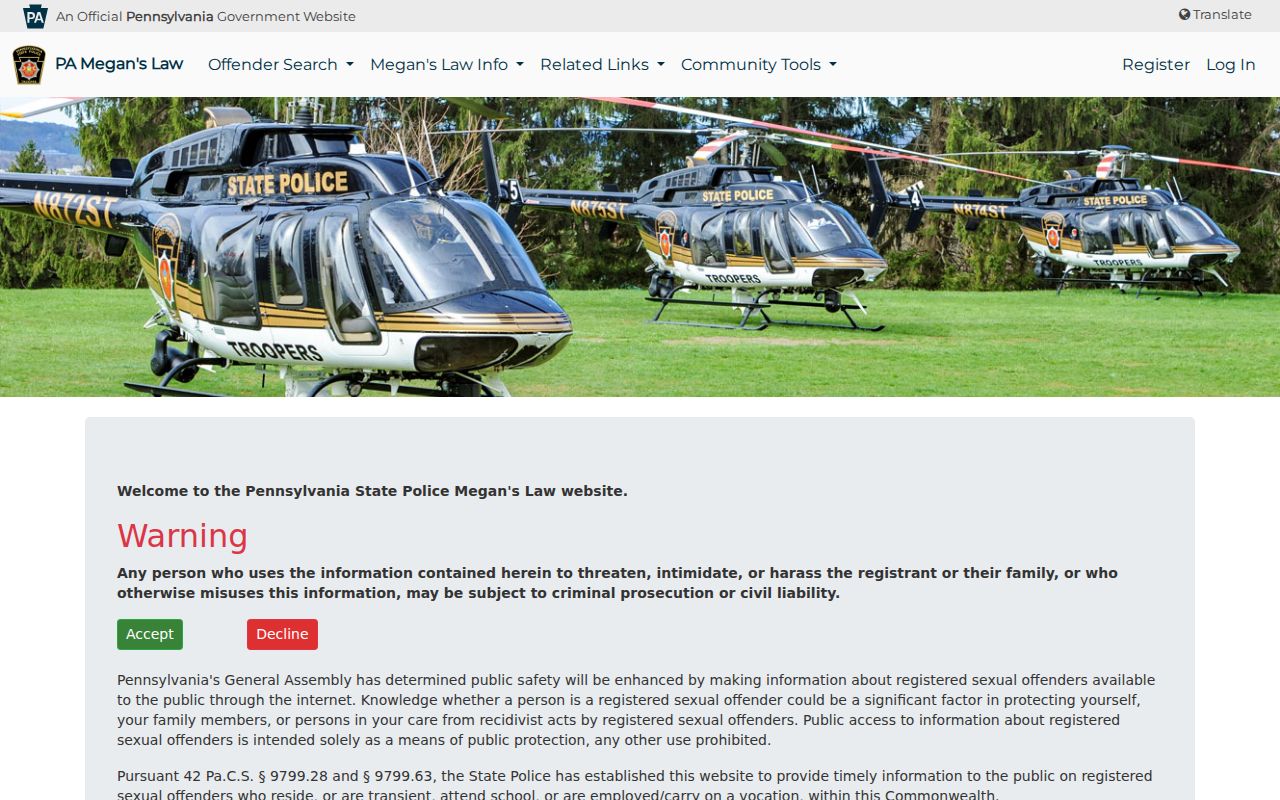
The registry's warnings reinforce the same basic rule for every record source: verify through the named custodian and do not turn a public result into a claim about a household.
The Pennsylvania DOC locator has its own name, number, age, county, and location fields. It supplies a state-custody route only, which is why a county-custody question should go to the county's stated records or booking contact instead.
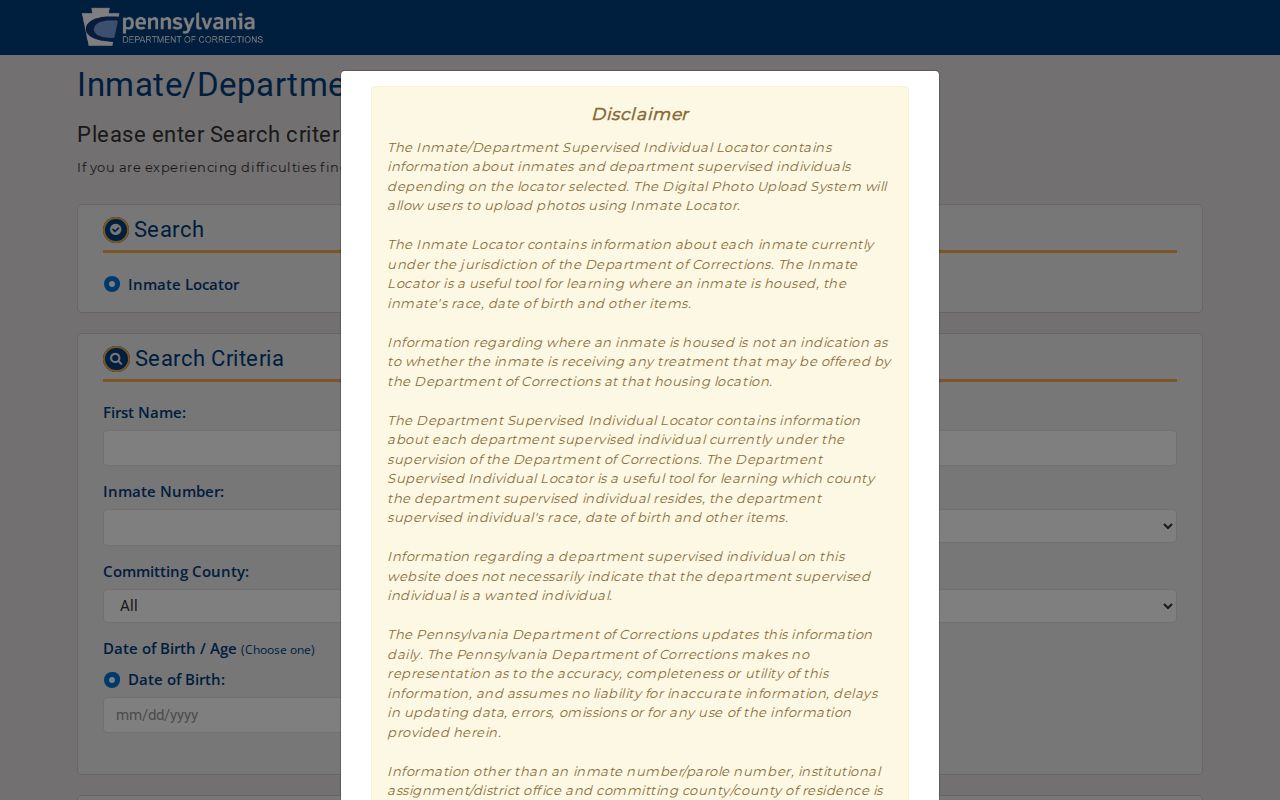
The state locator is separate from local jail information and should not be treated as a complete Northampton County custody list.
Northampton County License Verification
When a question concerns a known professional or organization, use the right statewide verification source. Pennsylvania's Licensing System offers person, facility, disciplinary, and provider routes. A status can lag, so time-sensitive information belongs with the issuing board. The Department of State business search is different: it uses an entity name or number and does not support an owner-name or business-address reverse search.
Open Pennsylvania Licensing System only after the credential, person, or organization is known well enough to make a responsible match.
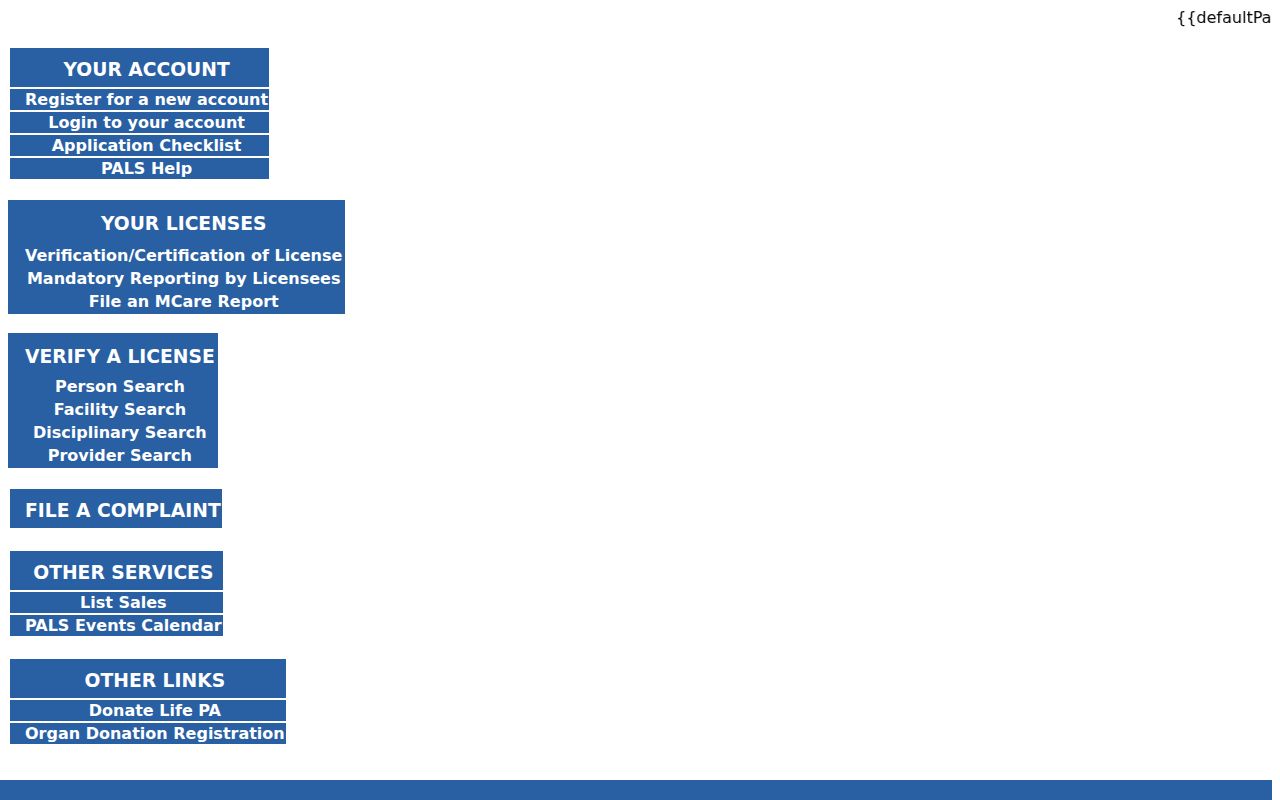
A license result can confirm a professional record, but it is not evidence of a person's current Northampton County address.
Northampton County Record Alert
Northampton County's Recorder links the free Landex Record Alert service for a specific property-document monitoring task. It can track up to five names and five parcel or UPI numbers for one contact route. A notice identifies a matching name, recording date, instrument number, document type, and municipality. That makes it useful for checking a recorded document promptly, not for deciding that a filing is improper.
Use Northampton County Record Alert to monitor an indexed name or parcel, then inspect the match in the Recorder's Webstore and contact the Recorder if a document needs an official explanation. The service does not block a recording, replace title research, or determine fraud.