
Northampton County Resident Lookup Sources
Different Northampton County records answer different questions. Assessment Data can tie a tax-record owner to a parcel and distinguish a mailing address from the situs, or physical property address. The Recorder can add a recorded transfer and legal description. A Pennsylvania docket can place a named participant in a court matter. Those results are leads, not a roster of everyone at an address. For an older name, the county Register of Wills, the State Archives, and local historical collections may be stronger evidence than a current database.
| Record | What it can confirm | Custodian or route | Access limit |
|---|---|---|---|
| Assessment property record | Tax-record owner, parcel, mailing and situs distinction | Northampton County Assessment Data | Not a list of all residents |
| Recorded instrument | Recorded parties, transfer trail, legal description | Recorder of Deeds | Online coverage and images vary |
| UJS docket | Public party, case, court, and filing context | Pennsylvania UJS | Protected and sealed material is excluded |
| County criminal search | Common Pleas criminal-record response | Criminal Division | In person or mail; $10 search |
| Voter status | Specific registration-status check | PA Voter Services | Not a street-browsing tool |
| Vital or probate record | Event, date, or estate-filing lead | DOH, State Archives, or Register of Wills | Dates and access rules control availability |
| Historic directory or paper | Period address or notice | Marx Local History Room | Coverage differs by place and year |
Begin with the source closest to the fact being checked. A parcel is useful for a property question. A docket number belongs in the court system. A marriage license belongs with the issuing county clerk. The distinction keeps a resident lookup narrow and reduces false matches.
Northampton County Court Name Checks
Pennsylvania UJS Case Search asks for both last and first name in a participant-name search. It also requires at least one limiter, such as date of birth, county, case status, docket type, or a filed-date range. Select Northampton County when the county is known, then compare the court, docket number, dates, and participant role before deciding a result concerns the same person. A date-only search is limited to 180 days, and a future-events setting is not a general historical search.
The UJS case-search interface shows the participant search route used for a Northampton County resident lookup.
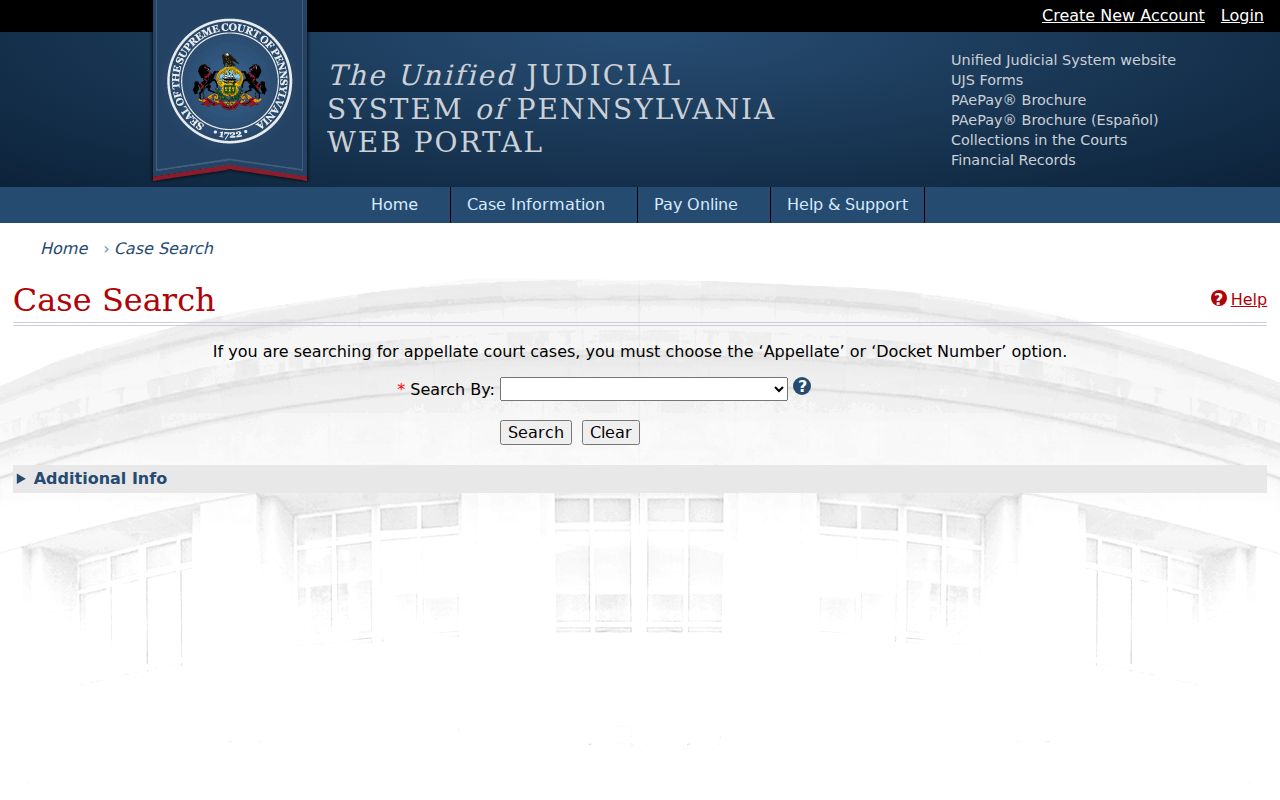
A docket result can show a caption, status, filing date, court office, participant fields, event history, and links to a docket sheet or court summary. Clerk entries can lag, while sealed, expunged, and limited-access cases are not displayed. A no-result therefore does not prove that no case exists.
For a person with a common surname, preserve initials, suffixes, spelling variants, municipality, and dates in a search log. Northampton County migrated court records to CPCMS in 2005, with the oldest migrated criminal case reported as 1995. That migration history is not a claim that all earlier court history is online.
Northampton County Civil Lookup Filters
Northampton County’s separate civil route is CountySuite Civil Court public search. It provides name, case-number, participant-address, and reference-number paths. Advanced options include an opened-date range, case category, judgments-only selection, participant category, attorney inclusion in a name search, and several sort choices. The county guide advises partial first or last names, last-name-first format, and the percent sign as a wildcard.
The Northampton County civil public case search is a separate path from the statewide UJS system.
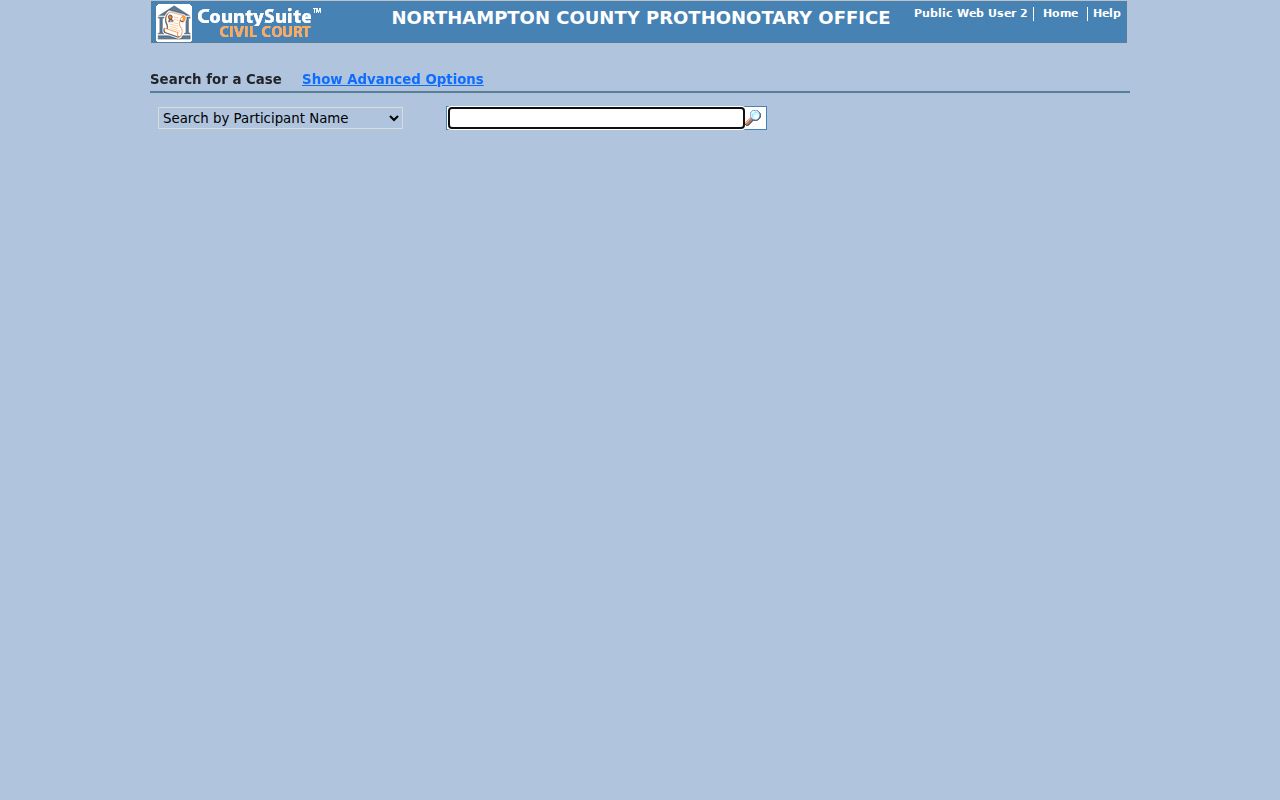
A contact-address option can be useful for distinguishing case participants, but it must not be read as proof of current residence. The county does not publish an online coverage start year for this civil search. Local Rule 205.4 supplies a public-access terminal for electronically filed civil cases, and protected or sealed filings may reveal metadata without their documents.
Verifying a Northampton County Resident
A sound resident lookup compares independent records in a fixed order. Assessment Data can provide the parcel, owner name, situs, and mailing address. The mailing address is an administrative contact address, not proof of where that person lives. Carry the parcel’s legal-description clues into the Recorder’s index, then use a public docket or individual voter-status check only when the name and location line up. Stop when the relevant public source ends and ask the named office for the specific record it holds.
- Search the known name, address, or parcel in Assessment Data and retain the municipality, situs, and parcel number.
- Use the parcel’s legal description and owner name in the Recorder trail to compare the most recent recorded transfer.
- Run the appropriate court or voter-status check with a county, date, or other available limiter, then compare identity details rather than names alone.
- For a document that needs official standing, request it from the custodian and note the source, date searched, spelling used, and record number.
- Docket
- A court’s chronological case record, usually organized by a case or docket number.
- Index and image
- An index points to a record; an image is the document view. An index hit does not guarantee that every document image is public.
- Certified copy
- A copy issued by the custodian with its official certification. State Archives copies of public vital material are non-certified.
- Situs address
- The physical property address used on a parcel record, distinct from a tax mailing address.
Northampton County Vital Record Calendars
Vital research starts with the event type and year. Pennsylvania births and deaths have been centrally registered since 1906. Birth records become public 105 years after the birth year and death records 50 years after the death year. The State Archives holds original births for 1906 through 1920 and deaths for 1906 through 1975, but current holdings should be checked rather than inferred from an older range. Its archival copies are non-certified, while the Division of Vital Records issues certified copies under its rules.
The Pennsylvania Vital Records forms page is the official starting point for the current application routes.
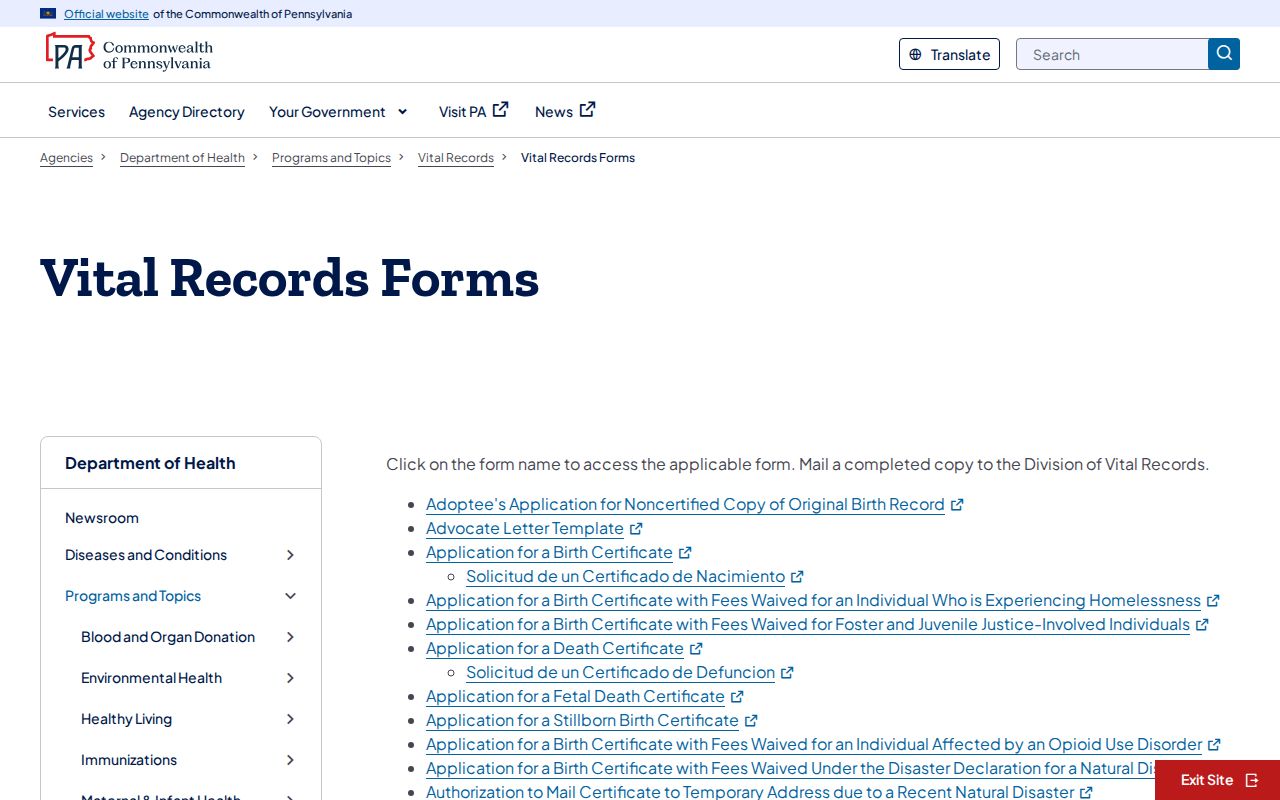
The Division offers online, mail, and public-office ordering, subject to eligibility and identity requirements. Birth and death certificates are listed at $20 each, with an additional $10 online service charge; the captured typical processing times are about two weeks for births and about three weeks for deaths. Marriage licenses are different: the Northampton County Register of Wills and Orphans’ Court is the first local custodian for licenses it issued. Divorce files belong with the Prothonotary in the county where the divorce was granted.
For 1893 through 1936 local birth and death material, contact the Register of Wills and Orphans’ Court. Earlier gaps may require county, church, newspaper, or archive research. Protected adoption and guardianship matters are not ordinary resident-lookup records.
Note: A vital-record application asks for identity and relationship information, so an official record cannot be substituted with a name search alone.
Northampton County Voter Status Limits
Pennsylvania’s voter-status tool is designed to confirm a specific registration. It is not a Northampton County directory by neighborhood or street. A returned status still needs context because records can change after a move, cancellation, death notice, address confirmation, name variation, or protected-address treatment. A nonmatch cannot establish that a person never lived in the county.
Public voter-file access has its own statutory rules. The Department of State request form identifies public information, street, walking, and full-voter-export products for county selection, but limits their permitted uses and prohibits publishing lists on the internet. Signatures, unique voter identifiers, driver-license data, the last four Social Security digits, registration-agency identity, and protected-address information are confidential. Address Confidentiality Program participants may use a substitute mailing address.
Use the Northampton County Elections Division for local questions about election records. Ballot selections are never voter-file data. A narrow confirmation may help distinguish two same-name people, but it cannot establish a complete household.
Northampton County Historical Lookup Trails
For family history, heirs, or a former classmate, historical material can supply the dated context that a current record lacks. The Marx Local History Room holds Easton directories beginning in 1855, cross-reference directories, census material, newspapers on microfilm beginning in 1799, and indexed church and cemetery resources. An obituary, probate docket, directory entry, or map is useful as a period clue, not proof of a current address.
The Pennsylvania State Archives archival vital-record service provides the official historical-copy route when the public-age calendar is met.
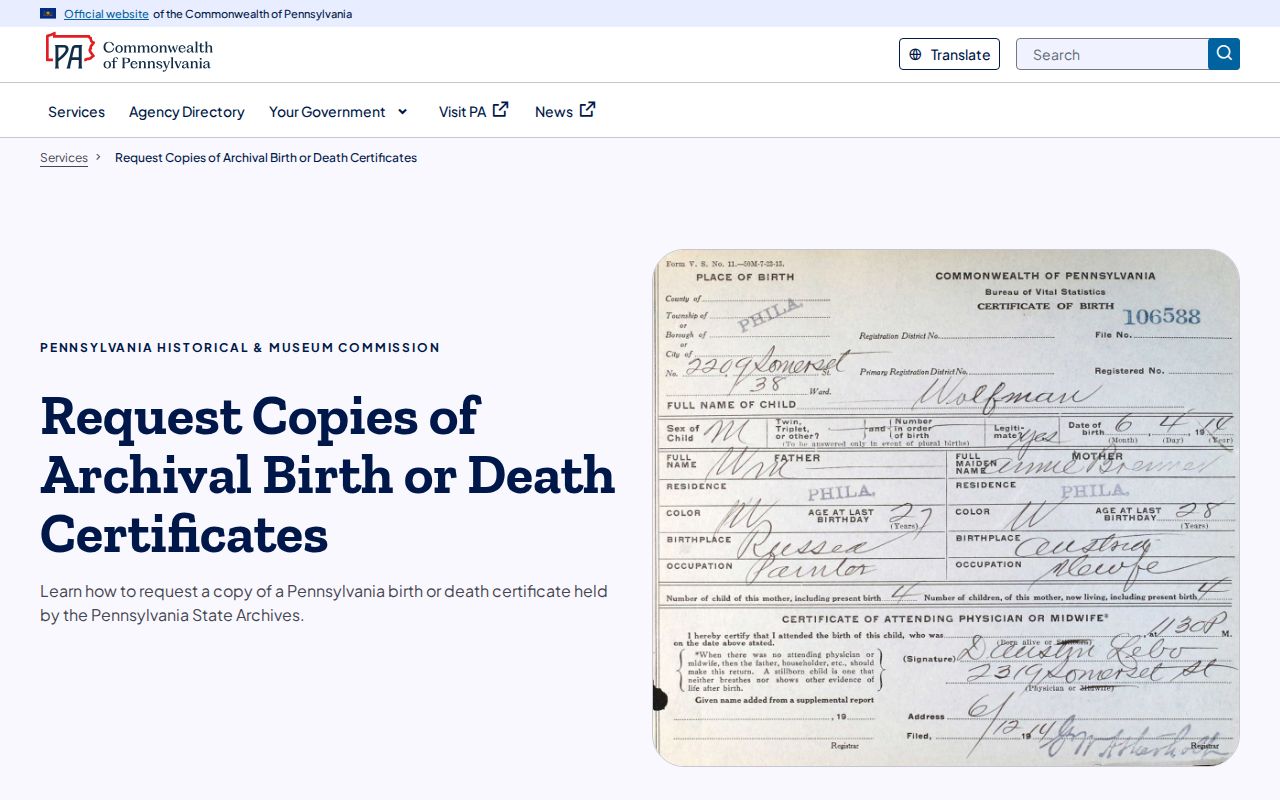
Historical name work is especially sensitive to spelling. Northampton County records reflect German, Irish, Moravian, and later industrial communities, so preserve the spelling, initials, accent marks, and source date rather than merging similar names. Estate files may identify a decedent, fiduciary, heirs, attorney, notices, and dates, but public availability must be confirmed with the Register of Wills or Orphans’ Court.
Northampton County Privacy Boundaries
Pennsylvania’s Address Confidentiality Program gives eligible participants a substitute mailing address for court, state, vehicle, voter, school, marriage-license, and utility records. A substitute address should never be treated as a location to work around. The Pennsylvania Right-to-Know Law, Act 3 of 2008, presumes local-agency records are public only until an exception, another law, privilege, or court order applies.
Some records have stricter rules by design. Court files may be sealed or restricted. Vital records follow eligibility and public-age rules. Voter files omit protected identifiers and addresses. Motor-vehicle information has separate federal restrictions. If an agency record is wrong, request correction from the custodian that maintains it: Assessment for parcel issues, the Recorder for recording-process questions, Elections for voter records, the Division of Vital Records for an amendment, or the clerk for docket procedure.
Northampton County Records Request Route
When an online search ends, request the existing record from the office that owns it. The Criminal Division offers a Northampton County Court of Common Pleas criminal-record search in person or by mail for $10, plus any applicable copy or certification charges. Mail payment must be a business check, certified check, or money order payable to Criminal Division. The office does not provide person-specific disposition or sentencing information by telephone.
For an executive-agency record that is not exempt, a narrow request under the Pennsylvania Office of Open Records RTKL process is more useful than a vague request for information about a person. Courts are judicial agencies, so RTKL is not a substitute for normal court access. The Recorder counter, county archive books and microfilm, the Register of Wills, the Prothonotary, Marx Room collections, and the State Archives are all documented fallback channels for records that are not fully online.
Note: Save the exact search terms, access date, displayed range, and record number so a custodian can understand a precise follow-up request.