
Northampton County Previous Residents by Era
Start with the source closest to the time in question. County assessment and GIS records establish a current parcel and its situs address, but their historical display span is not confirmed. The Recorder supplies the recorded transfer trail. For a household layer, the Easton collections can place a listed name at an address for a particular directory year. Census, newspaper, tax, and map material then help test whether the address wording and time period line up. None of these sources creates a complete list of everyone who lived at a property.
| Source | Years it covers | Where held | What it can show |
|---|---|---|---|
| Assessment and GIS | Current public application; historical display span not confirmed | County Assessment and GIS | Parcel identifiers, situs, tax-record owner, mailing distinction, and map context. |
| Recorder filings | Exact online cutoff not located | Recorder, Landex, and courthouse materials | Recorded transfer sequence, volume/page clues, and legal descriptions. |
| Easton city directories | Starting 1855; annual run needs catalog confirmation | Henry F. Marx Local History Room | Printed name and address entries for directory-covered places. |
| 1890 Census Directory | 1890 | Marx Room and digitized PDF | A county and municipal snapshot near the lost federal census schedules. |
| Federal census | 1790 through 1950 publicly released | National Archives and library databases | Household composition at the census date, not an annual address record. |
| Local newspapers and maps | Newspapers since 1799; maps vary by item | Marx Room and Library of Congress | Notices, building context, street layout, and dated historical clues. |
For an older address, lead with the legal description and a dated deed rather than a present-day street number. For a more recent Easton address, a cross-reference directory can be the useful bridge from a number to a printed household entry. Note: A record’s date establishes when it was made, not necessarily every interval someone was at that address.
Northampton County Recorder Date Ranges
The Landex Webstore document search has separate dates for each record class. Deed index data begins in May 1978, while deed images begin in August 1947. Mortgage index data begins in December 1984 and mortgage images in February 1951. Miscellaneous index data begins in December 1985 and images in December 1947. Map index and images begin in January 1993. Those dates should not be compressed into one claim that all county documents are online from the same year.
Landex searches by county and party name, with optional recording dates and document types. It also has instrument-number and book/page routes. Broad name matches are capped at 250, so a date, document type, or spelling variant may be needed. A purchased Webstore PDF is placed in order history and is not emailed; certified copies come from the courthouse or Recorder. The recorded date is the dependable chronology marker, rather than an assumed signing or sale date.
Northampton County Archives and Microfilm
The Northampton County Archives historical-records route is a practical fallback when a web search ends. The Archives holds original books and papers, some computer indexes, and access to the Landex system. Its free in-person research, mail or email historical-search option, and request forms can help frame a precise deed, tax, estate, court, or naturalization question. The form asks for details such as name variants, time period, and municipality, which makes a focused request more useful than a broad request for an address history.
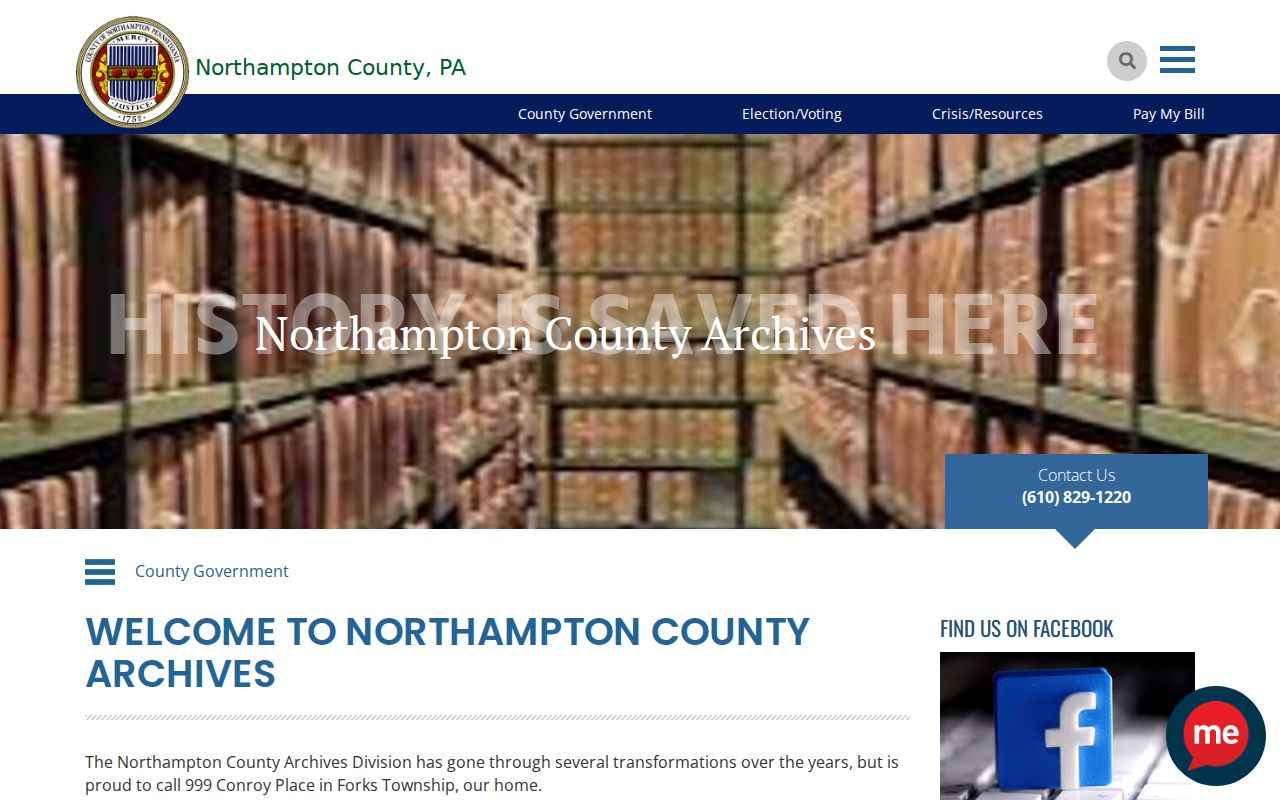
The image reflects the archival route, not a substitute for the record itself. County guidance says microfilmed records remain at the Northampton County Courthouse in the office of origin, while the Archives keeps original materials and selected indexes. That split matters for the long middle period between the oldest digitized deed books and later remote images.
The county reports free research in person, a $5-per-name historical search by mail or email, and $0.50 per copied page. It does not certify copies. Call or email before visiting because the proper stop depends on whether the item is an archival original, a courthouse microfilm image, or a Recorder copy. Note: The Archives cannot copy an original if copying would harm it, although a transcription may be possible.
Trace Northampton County Previous Residents
A chain of title is a property trail, not a household roster. Begin with Northampton County Assessment Data to identify the parcel, situs address, municipality, tax-record owner, and legal-description clues. Use the latest owner and legal description to search the Recorder route. Then test each earlier transfer against its grantor, grantee, recording date, and lot or subdivision wording. This avoids treating a changed street number or a similarly named parcel as the same place.
- Record the current parcel number, situs, municipality, owner field, and legal-description clues from Assessment Data or the county GIS layer.
- Search the current owner as a grantee in Landex or at the Recorder, then open or request the referenced deed image, volume/page, or instrument record.
- Read the prior seller as the next grantee search target. Compare the legal description, map/block/lot language, municipality, and recording date before accepting the match.
- Repeat the dated grantee-to-grantor sequence. Name changes, estates, trustees, multiple parties, and subdivisions need extra checking.
- When the remote path stops, ask the Recorder or Archives which index books, retrieval materials, or courthouse microfilm cover the earlier period.
- Grantor and grantee
- The grantor transfers an interest in a recorded document; the grantee receives it. Their roles are search anchors, not proof of every person at the property.
- Chain of title
- A dated sequence of recorded transfers tied to the same land through parties and legal-description details.
- Legal description
- The land description in a recorded instrument, such as lot, block, subdivision, or metes-and-bounds wording. It can remain steadier than a street number.
Northampton County Deed Record Details
Recorder material can connect party roles, record type, recording date, volume/page, and sometimes an instrument number. The county confirms that recorded documents are imaged to retrieval stations, microfilmed, and open for public inspection. Check the image before drawing a conclusion from an index title alone. The county’s public material does not confirm whether every online image is free, login-gated, or charged, so use the counter when an image-access question affects the next step.
For much older land, the PHMC Northampton County digitized-record guide lists deed books from 1752 to 1866 and grantor and grantee deed indexes from 1752 to 1926. The county’s on-site route remains important between those historical materials and Landex image coverage. Individual tax assessments from the late 1700s through 1882 add context about taxation, but they do not replace a deed trail.
Northampton County Past Residents in Directories
The Henry F. Marx Local History Room holds Easton city directories beginning in 1855, along with Easton-area telephone and cross-reference directories. A cross-reference directory works in the reverse direction: begin with an address and locate the historical entry tied to that address for the covered year. Its scope is Easton and the surrounding region, not an unbroken countywide annual sequence. The Northampton County Directory Book has the collection-focused details; an address trail should use the nearest available volume rather than assume a missing year exists.
Pair each printed directory entry with its publication year, section, spelling, and municipality. Then compare it with the nearest released federal census, recorded transfer, map, and newspaper issue. The digitized 1890 Census Directory of Northampton County is especially useful around the lost federal schedules, but it is a historical snapshot, not a full replacement census.
Address sequence: directory year and printed address → cross-reference volume for the same or nearby year → census date → recorded transfer date → newspaper date. Each item answers a different time question, so preserve its original wording.
Northampton County Address Changes in 1917
Bethlehem’s 1917 consolidation joined five municipalities, and many street names changed, especially in South Bethlehem. That is a real Northampton County continuity issue, not a spelling error to erase. Keep the historic municipality and street form exactly as a directory, map, or deed presents it. Then use a period map and the parcel’s legal-description clues to connect it to later terminology.
Lehigh University’s Beyond Steel project uses the 1900 to 1901 Sholes directory with related census and map material, preserving historic locations rather than silently substituting modern addresses. The Bethlehem Room also has a house-research guide and directories documented from 1895 forward. Consult the relevant physical volume or catalog for a complete run because exact annual coverage and publisher details were not verified online.
Northampton County Maps for House History
Maps date the place itself. The 1860 Northampton County map includes landowner and householder labels, borough and village insets, a business directory, and other period context. The inspected Easton Sanborn map is a 1963 set of 107 sheets that can help compare building footprints, streets, and land use. Neither map names every person at an address.
Use a map closest in date to the directory or deed being checked. A map can show that a street layout or building existed in the period, while the directory, census, or recorded document supplies the separate person or transfer evidence. This is also a way to spot a changed street name before attaching two records to the same property.
Northampton County Previous Residents Endpoints
Newspapers, obituaries, cemetery material, and estate files can close or extend a historical trail after the last address listing. The Marx Room newspaper collection begins in 1799, and its article index covers several blocks through 2007. The room’s obituary index begins in 1900. A search result is a lead to the cited issue or record, not a reason to assume the notice proves a person stayed at an address throughout a period.
For an estate route, the Register of Wills and Clerk of the Orphans’ Court holds estates from 1752 forward. It may provide a decedent, fiduciary, beneficiary, attorney, or filing-date lead subject to court restrictions. Use the correct custodian for the record type, and avoid treating protected proceedings as a general address source.
Northampton County Previous Residents Limits
A parcel owner, tax mailing address, deed party, or directory entry identifies a role at a point in time. It does not prove present household membership, fill every year between documents, or justify publishing personal details. County property data itself warns that information may change or be deleted and is not guaranteed current. Reconcile a title-sensitive point with the Recorder and a current assessment point with the Assessment Office.
Lawful use. Northampton County previous-resident research is suited to family history, estate questions, and learning a property’s history. Do not use a record trail to stalk, harass, intimidate, or harm any person.
Pennsylvania’s Address Confidentiality Program can give eligible participants a substitute mailing address in public-facing systems. The Right-to-Know Law also contains exceptions for sensitive and safety-related information. A missing, masked, or different address should be respected, not reconstructed from other sources.